Introduction to the Urdu Science Board
In light of the constitutional requirements for promoting Urdu as the national language, there was a need for an institution that could foster the development of Urdu within the country, enabling it to align with every sphere of life. Consequently, in 1962, a resolution was passed by the Cabinet to establish the “Central Board for the Development of Urdu.” Acting upon the recommendations of the ‘Commission on National Education,’ the Government of Pakistan established the Board on 24 May 1962.
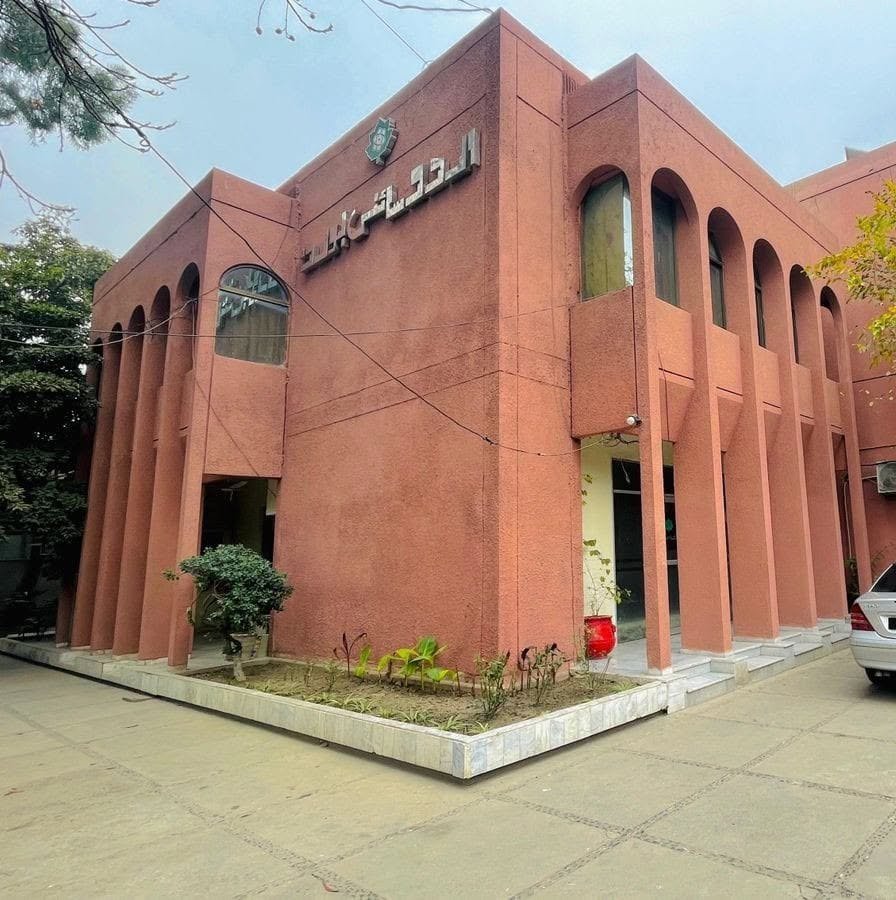
The Urdu Science Board is responsible for developing books and study materials in the Urdu language—covering the fields of science and technology—for students, teachers, teacher-training institutions, and the general readership. The Board’s office is located on Upper Mall, Lahore.
The Board’s journey
-
1962
The “Central Board for the Development of Urdu” was established on 24 May.
-
1982
On 31 October the Federal Ministry of Education amended the original resolution and renamed the institution the “Urdu Science Board.”
-
2004
On 29 December the Board was designated a subordinate office of the Federal Ministry of Education.
-
2008
In January the Board was assigned new targets.
-
After the 18th Amendment
The Federal Ministry of Education was abolished and the Board was placed under the Cabinet Division.
-
2013
The Board was transferred to the Ministry of Information, Broadcasting, and National Heritage.
-
2016
The National Heritage and Culture Division was established, and the Board functioned as an institution under it.
-
Today
The Board operates as a field office of the Idara-e-Farogh-e-Qaumi Zaban (National Language Promotion Department), Islamabad.
People associated with the Board
Several prominent academic and literary figures, as well as key officials, have been associated with the Board.
- Col (Retd.) Majeed Malik
- A.D. Azhar
- Muhammad Hanif Ramay
- Ashfaq Ahmed
- Kishwar Naheed
- Dr. Agha Muhammad Sohail
- Zafar Iqbal
- Amjad Islam Amjad
- Muhammad Ikram Chughtai
- Dr. Khalid Iqbal Yasir
- Dr. Abdul Ghafoor Rashid
- Rashid Bashir Mazari
- Professor Dr. Nasir Abbas Nayyar
- Professor Dr. Rauf Parekh